

Jersey City police punch
Settlement for a man punched by a Jersey City police officer while walking his dog. Aymen was co-counsel.
Jersey City, New Jersey · 2022 · PatchThe Aboushi Law Firm · A private law firm, not affiliated with any government agency.
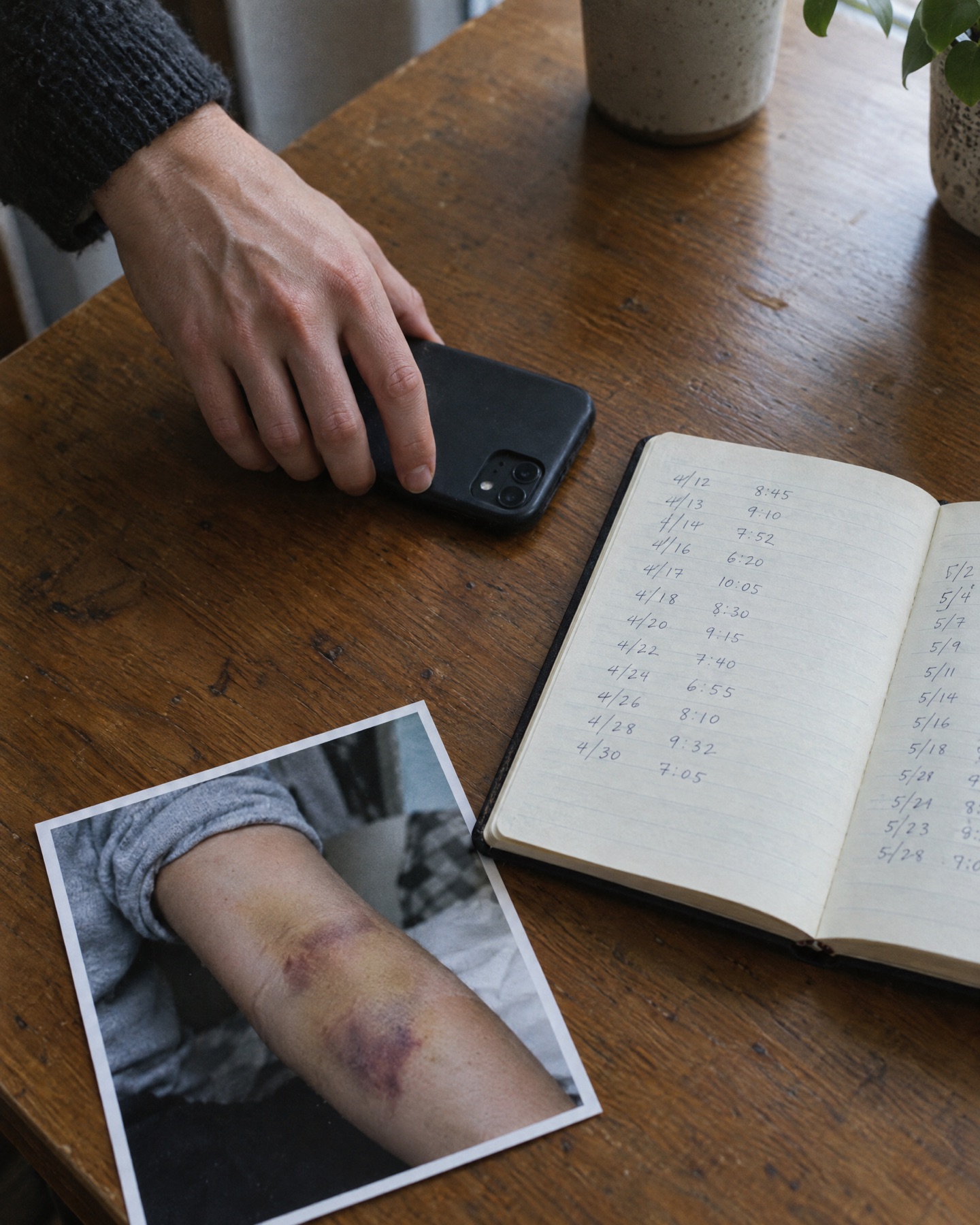
The days after a use of force decide what evidence survives. These steps protect your health, your criminal case, and any civil claim.
Go to an emergency room, urgent care, or your own doctor as soon as you can, even if the injuries seem minor. Tell the provider exactly how each injury happened. Medical records made close to the event are some of the strongest evidence in a force case. Photograph every injury in good light, with a date, and repeat the photos daily as bruises develop and heal. Keep discharge papers, prescriptions, bills, and notes from follow-up visits. If you were injured in custody, ask for medical attention there and write down who you asked and when. Gaps in treatment are often used against you later.
Write down everything you remember while it is fresh: the time, the place, what was said, the officers' names, badge numbers, and vehicle numbers, and the names of witnesses. Save any video you or others recorded, and back it up to a second location. Nearby homes, stores, and gas stations often record over footage within days, so ask them promptly to keep it. A lawyer can send formal preservation letters to the police department and to private owners. Body-worn camera footage, dispatch audio, and use-of-force reports usually exist, but they are not kept forever. New Jersey requires police to keep body-camera recordings for at least 180 days, and longer when force was used or a complaint was made. Request them early, through an Open Public Records Act (OPRA) request or a lawyer's preservation letter. Do not edit or trim any video.
Tell us what happened in about five minutes, by voice or typing. The firm reads every review and tells you which clocks apply.
Officers who use force often file charges such as resisting arrest or obstruction. If you were charged, you have a right to a defense lawyer, and you should not discuss the incident with police, prosecutors, or on social media without one. Statements you make can be used in both the criminal case and a later civil case. The outcome of the criminal case can affect which civil claims are available. A conviction can limit some claims: under Heck v. Humphrey, a civil claim that would mean the conviction was invalid generally cannot go forward unless the conviction is first overturned. A dismissal can open others. The civil and criminal lawyers should coordinate from the start. Ask your defense lawyer to request all recordings in discovery.
The New Jersey Attorney General's Use of Force Policy, in effect statewide since 2022, allows force only as a last resort. It requires officers to de-escalate whenever it is safe to do so, to intervene when another officer uses excessive force, and to report every use of force. A violation of the policy is not automatically a constitutional violation, but it can be strong evidence that the force was unreasonable. The officer's use-of-force report is one of the first records to request.
Under the New Jersey Attorney General's Internal Affairs Policy and Procedures, law enforcement agencies must accept complaints of misconduct from any person, including anonymous complaints. You do not need to give a sworn statement to start the process. An internal affairs complaint can lead to discipline, but it will not compensate you. It also creates a record that others will read. If you have a pending criminal charge or plan to file a civil claim, speak with a lawyer before you file so that your account is complete and consistent. Ask for written confirmation that the complaint was received, and keep a copy.
State tort claims against a town, county, or the State, such as assault and battery, require a written Tort Claims Act notice within 90 days under N.J.S.A. 59:8-8. Constitutional claims under 42 U.S.C. § 1983 and the New Jersey Civil Rights Act must be filed within two years, and they do not require the notice. People held in a jail or prison may also need to use the facility's grievance process before filing certain federal claims. Mark the 90-day date on your calendar the day you read this. If you are unsure which deadline applies, treat the shortest one as controlling until a lawyer reviews it.
Settlement for a man punched by a Jersey City police officer while walking his dog. Aymen was co-counsel.
Jersey City, New Jersey · 2022 · PatchJury verdict for a severely autistic teenager beaten by police officers during the Hurricane Sandy evacuation, plus $20,000 in punitive damages. The Appellate Division unanimously affirmed the judgment in 2019.
Manhattan, New York · 2016 · New York Daily NewsGeneral information, not legal advice.
This is an automated tool, not a lawyer. It answers from the firm's own pages and can't give legal advice. Ask about your rights, your deadline, or how the firm works, in English or Español.