

Occupy Wall Street pepper spray
Settlements for two protesters pepper-sprayed by a police commander while penned in.
New York City (New York) · 2015 · GothamistThe Aboushi Law Firm · A private law firm, not affiliated with any government agency.
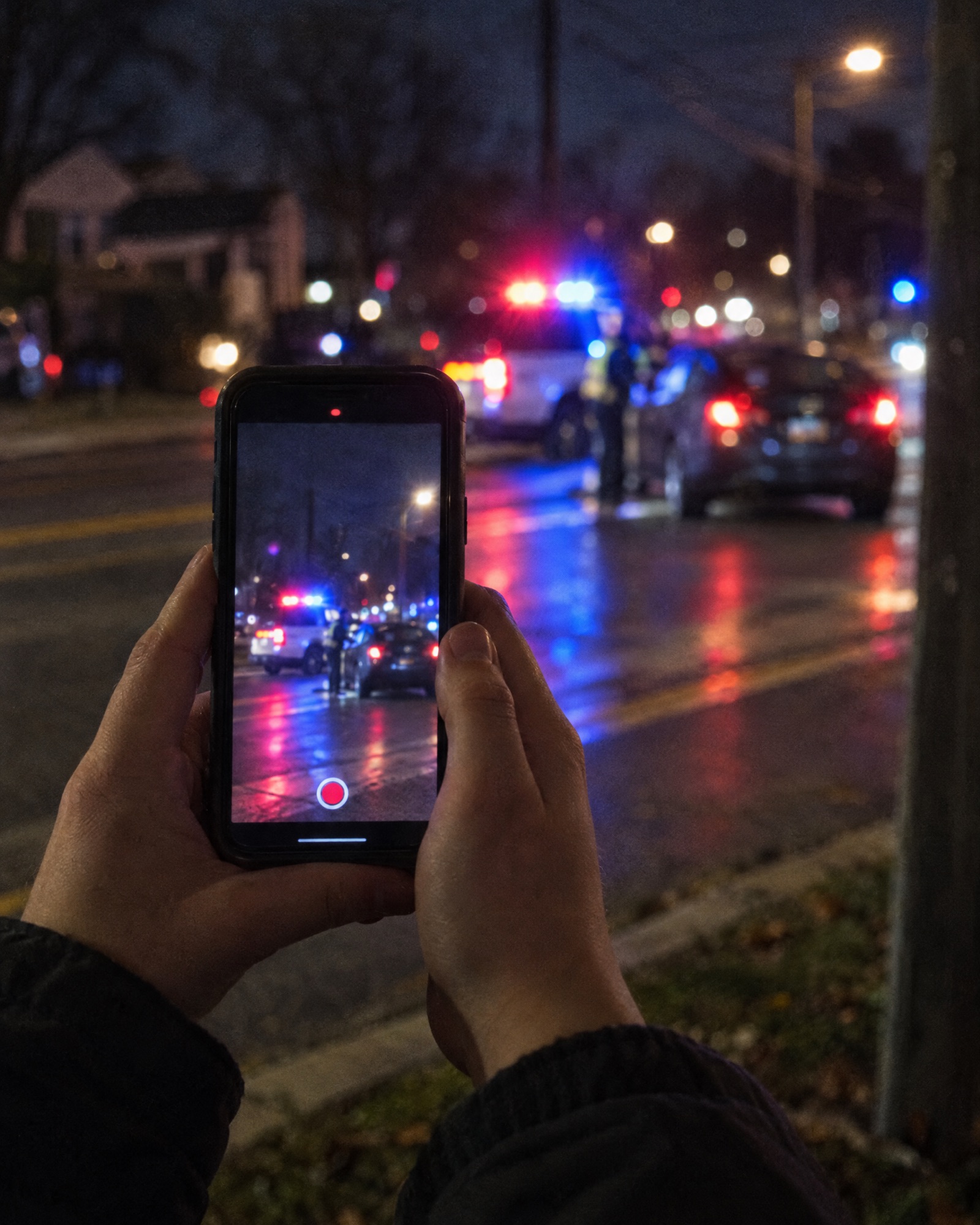
You have a First Amendment right to record police doing their jobs in public in New Jersey. Here is what that right covers and where its limits are.
In Fields v. City of Philadelphia, decided in 2017, the U.S. Court of Appeals for the Third Circuit held that the First Amendment protects the act of photographing, filming, or otherwise recording police officers conducting official duties in public. The Third Circuit's decisions bind the federal courts in New Jersey, Pennsylvania, and Delaware. The right does not depend on whether you are a journalist or whether you intend to publish. It covers bystanders and the person being stopped. A bill to write this right into New Jersey statute, A4290, was introduced on February 19, 2026. It is not law, so the protection rests today on the Constitution and court decisions.
New Jersey's Wiretapping and Electronic Surveillance Control Act, N.J.S.A. 2A:156A-1 et seq., permits a person to record a conversation they are part of, or when one party consents, unless the recording is made to commit a crime or tort. This is called one-party consent. When officers speak to you, you are a party to the conversation. Recording officers in public carrying out their duties is also protected by the First Amendment under Fields. Secretly recording a private conversation you are not part of is a different matter, and it can be a crime. The recording itself is evidence, so keep the original file.
Tell us what happened in about five minutes, by voice or typing. The firm reads every review and tells you which clocks apply.
The right to record does not include a right to interfere. Keep a reasonable distance, do not physically block officers, and follow lawful orders that are not aimed at stopping the recording itself. If you are the driver in a traffic stop, keep your hands visible and tell the officer you are recording before reaching for a phone. Say calmly that you are recording and do not intend to interfere. The right applies in public places and to official police activity. Private property and certain secure areas can raise different questions. If an officer tells you to move back, move back and keep recording.
Keep it short and calm. These lines work in most encounters:
"Officer, I'm recording. I'm not interfering, and I'll stay back here."
"Am I being detained, or am I free to go?"
"I don't consent to a search of my phone."
"I'm going to remain silent. I'd like to speak with a lawyer."
If you are told to move back, say "Okay, I'm moving back," move, and keep recording. Don't argue about the law on the street. The place to settle that is later, with the video.
Do not physically resist. State clearly that you do not consent to a search of your phone. Officers generally need a warrant to search the contents of a phone. Try to remember the officer's name and badge number, and note any witnesses. If you can, use a cloud backup or live streaming so the recording survives even if the device is taken. Arrests, citations, or seizures that are meant to stop recording can support a First Amendment retaliation claim, which is subject to a two-year deadline under 42 U.S.C. § 1983 and the New Jersey Civil Rights Act. Write down what happened as soon as you can.
Settlements for two protesters pepper-sprayed by a police commander while penned in.
New York City (New York) · 2015 · GothamistThis is an automated tool, not a lawyer. It answers from the firm's own pages and can't give legal advice. Ask about your rights, your deadline, or how the firm works, in English or Español.
